We've Seen This Before
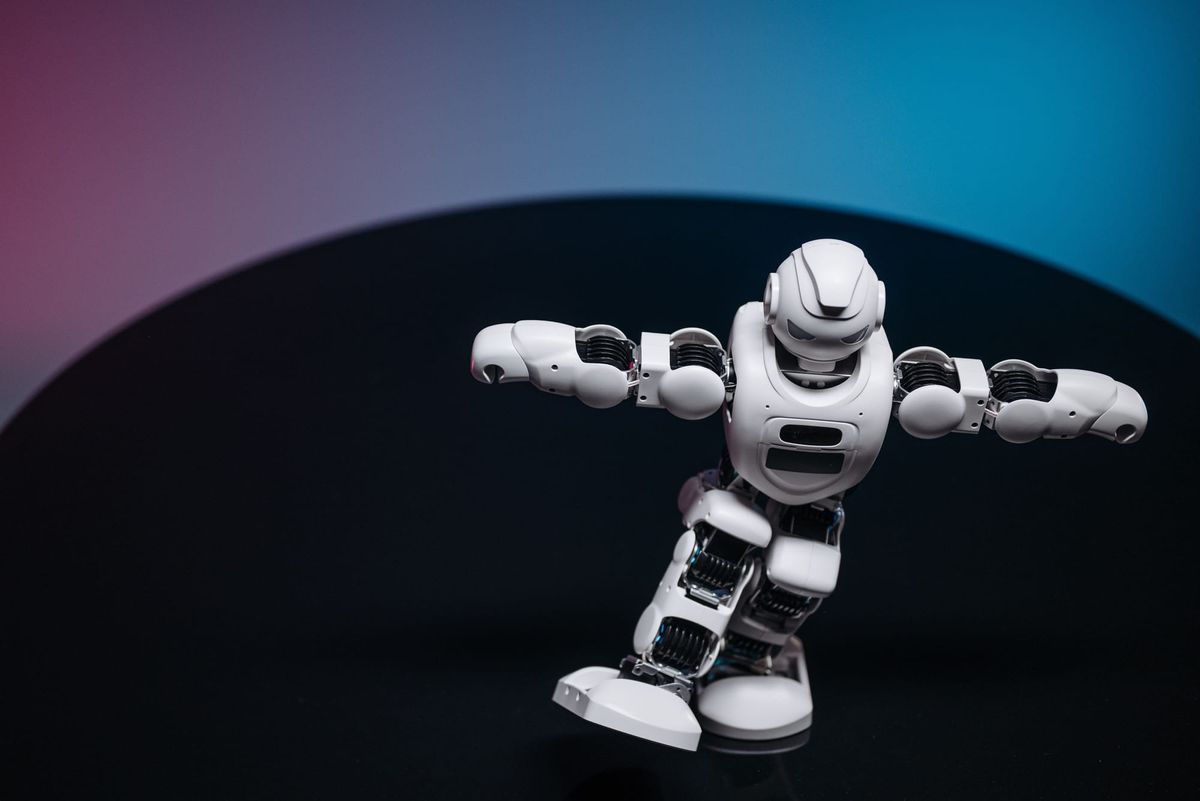
Let's talk for a moment about China's Humanoid Robot Olympics.
You've probably seen the clips of bipedal robots hurling themselves down a track at breakneck speeds before smashing into mats and tearing themselves apart accompanied by showers of sparks with the comedic timing of a plucky robot sidekick from a kid's movie. Here's one a friend showed me that had us giggling maniacally:
WATCH: A humanoid robot training for the “Robot Olympics” in Beijing runs too fast, fails to stop, slams into a safety cushion, and breaks at the waist pic.twitter.com/WEHdYCiPlO
— Breaking911 (@Breaking911) August 20, 2026
I didn't think too much of it at the time. There are many clips like this in circulation at the moment. A scroll on your social media of choice might expose you to robots falling up and down stairs, tripping while running at high speeds, or roundhouse-kicks that surely damaged some hip joints. Generally it's a story of near competence. Robots that go very fast... until they explode.
But the more I thought about it, the more I had the feeling that we'd seen this before. I'd experienced this very specific brand of anti-AI schadenfreude not too long ago. Chances are good you did too. Depending on how deep into tech you are, it was probably between 3 and 5 years ago that you had your first brush with AI image generation. It started out as a toy. It was a funny thing to show your friends so you could laugh together about how the computer did a mediocre job. How foolish that Dall-E mini continued to generate hands which belonged to eldritch horrors. How droll that every face Midjourney generated possessed a deeply comical wrongness that allowed it to feel non-threatening.
Then it got good. Seemingly overnight, your older relatives and less tech-savvy friends were sharing AI-generated images that they had mistaken for real photos. Listings on online stores featured images of products that simply didn't exist. Politicians were sharing images and videos of their opponents in impossibly compromising scenarios giving speeches that were beyond political suicide that less tuned-in observers would take as proof that their team was the good one. In less than 3 years, a toy had become a weapon. The tools never stopped being accessible, they never got prohibitively expensive (most tools ranged from free to $150/mo) to use, they just got better. As the novelty wore off for casual users, those with a willingness to deceive (but neither the time, energy, nor talent to spend on actually deceiving people) got a devious glint in their eyes and used this new capability to extract attention and dollars from unsuspecting viewers.
So let's not be caught by surprise this time. Boston Dynamics' oldest video on their Youtube channel today is from 17 years ago. Clearly they were way ahead of the curve, but the field eventually caught up. The timeline might not be the same as with AI image-generation. There's no mistaking that they aren't great yet, but we should expect that humanoid robots will get good. More importantly, robotics in general is likely going to get very good in the near future. Building and training robots that have to operate in the real world is more complicated than image-generation, but it's very clear that some scientists and manufacturers in the space are feeling good about the progress they've made and are willing to show it off.
It took no time at all for someone to attach a pistol with a remote-firing mechanism to a consumer-grade drone, and now drones are the defining weapon in both Ukraine and Iran (though obviously having them wield guns was done away with in favor of more... consistent force delivery methods). I think it's unlikely that we're about to start seeing humanoid robots dominating the front lines, but we can expect that robotics on the battlefield will become more and more dominant.
The jobs that we assumed were "irreplaceable" as LLMs were starting to threaten digital text and data-heavy labor may not be so safe. It may not be cost-effective any time soon, but that didn't stop tech giants when they were pushing AI as a loss-leader to try to embed LLMs into industry (a strategy that anyone who works in tech will tell you has more or less worked). Amazon warehouses threatened by unionization might be less concerned with the cost of replacing their labor if it comes with the guarantee that the new bodies won't ever try to fight for better treatment. Even if the new robot does a mediocre job, the cost might be worth it if a business owner no longer has to concern themselves with the woes associated with having human workers. Sam Altman says he already uses OpenAI as a parenting assistant; it's not hard to imagine he'd welcome an OpenAI-enabled humanoid robot into his home as a nanny and teacher.
I don't know what the answer is here. I'm not even sure that replacing grueling menial labor is inherently a bad thing. This is just a warning that we shouldn't be taking the funny clips of humanoid robots hurling themselves into walls and down stairs at face value. Feel free to laugh. Enjoy the moment. Just don't assume that we'll stay here forever.